
Close Menu
  • Home
  • Showbiz
  • Lifestyle
  • Sports

Subscribe to Updates

Get the latest creative news from FooBar about art, design and business.

What's Hot

GJA fires back over brutal attacks on journalists, labels security agencies “enemies of press freedom”

December 1, 2025

The Role of the Budgeting Approach in South Africa

November 29, 2025

Senate rejects Health Ministry’s request to borrow $82bn to purchase mosquito nets

November 29, 2025
  • Home
  • Showbiz
  • Lifestyle
  • Sports
Facebook X (Twitter) Instagram
  • Home
  • Showbiz
  • Lifestyle
  • Sports
Home»Featured»New study reveals toxic metals in crops and fish due to Galamsey activities
Featured

New study reveals toxic metals in crops and fish due to Galamsey activities

IdeasghonlineBy IdeasghonlineSeptember 23, 2025No Comments2 Mins Read
Facebook Twitter Pinterest LinkedIn Tumblr Email
New study reveals toxic metals in crops and fish due to Galamsey activities
Share
Facebook Twitter LinkedIn Pinterest Email

In Ghana’s small-scale mining (Galamsey) towns, a year-long investigation has found dangerously high levels of lead, arsenic, and mercury, posing major environmental and public health risks.

Between August 2024 and September 2025, Pure Earth and the Environmental Protection Agency (EPA) collected soil, water, air, crop, and fish samples in six different regions for the study.

Toxic metal concentrations were found in communities such as Konongo Zongo, Prestea, Asiakwa, Bibiani, and Wassa Kayianko that were far higher than both national and international safety requirements.

READ ALSO: Deborah Seyram Adablah Blasts Ghana Police Amid Recent Court Case
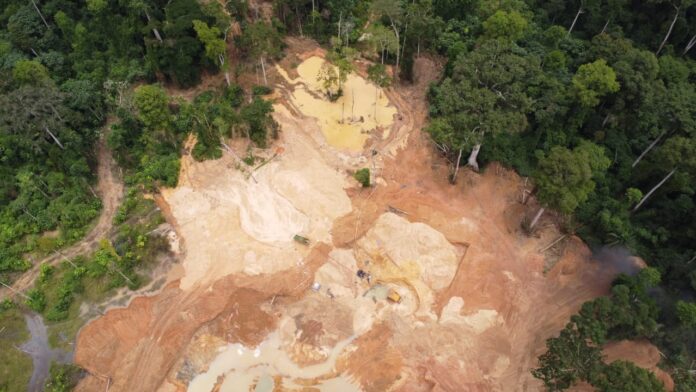
New study reveals toxic metals in crops and fish due to Galamsey activities

Mercury levels in the soil at Konongo Zongo were more than 560% higher than what was considered safe, with some measurements above 1,300 parts per million.

Arsenic levels peaked at 10,060 parts per million—more than 40 times higher than global thresholds—while water samples in nearby towns recorded arsenic levels more than 300 times above Ghana’s drinking water standards.

Fish and crops were also found to be contaminated with lead; in the Western North Region, pumpkin leaves had levels more than 30 times higher than recommended.

Researchers caution that tainted food chains, hazardous water, dirty land, and poisonous air provide a variety of exposure dangers to locals.

They warn that long-term exposure may cause cancer, neurological impairment, renal failure, and childhood developmental abnormalities.

In order to coordinate urgent responses, the report suggests community health education, low-cost remediation initiatives, ongoing monitoring, and the creation of a national task force.

Source: Ideasghonline

Galamsey
Share. Facebook Twitter Pinterest LinkedIn Tumblr Email
Ideasghonline
  • Website

Related Posts

GJA fires back over brutal attacks on journalists, labels security agencies “enemies of press freedom”

December 1, 2025

The Role of the Budgeting Approach in South Africa

November 29, 2025

Senate rejects Health Ministry’s request to borrow $82bn to purchase mosquito nets

November 29, 2025
Add A Comment
Leave A Reply Cancel Reply

Recent Posts
  • GJA fires back over brutal attacks on journalists, labels security agencies “enemies of press freedom”
  • The Role of the Budgeting Approach in South Africa
  • Senate rejects Health Ministry’s request to borrow $82bn to purchase mosquito nets
  • Senate queries FG’s plan to borrow $200m for mosquito nets
  • Ghana Currency Depreciation
Categories
  • Featured
  • Lifestyle
  • Showbiz
  • Sports
  • Uncategorized
Editors Picks
Top Reviews
Advertisement
© 2025 | Ideasghonline
  • Privacy Policy
  • Terms and Conditions
  • About Us
  • Contact

Type above and press Enter to search. Press Esc to cancel.